

It seems you are using an unsupported browser. Please update your browser to Chrome or Firefox for the complete NUK website experience.
Baby in highchair
Feeding & Nutrition

Nurturing every bite, every sip

From the very first precious sips of milk to those joyful independent bites, feeding is a beautiful dance of discovery, growth, and connection. This page is packed with wisdom and practical guidance to help you navigate every stage of your little one’s nutritional journey, ensuring they thrive with every meal.

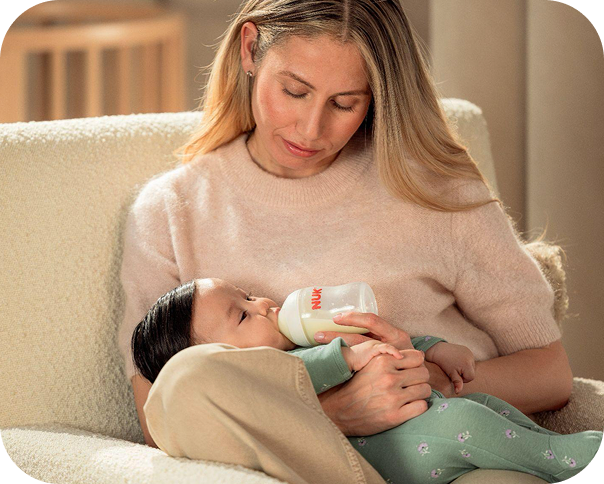
Mother feeding baby with NUK bottle
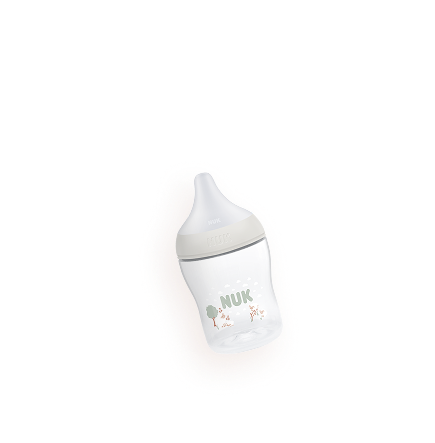
NUK bottle
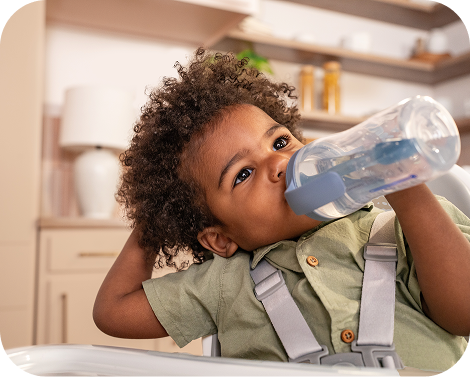
Child drinking from cup

Caring
for a little
tummy

Baby being held
NUK Bottle

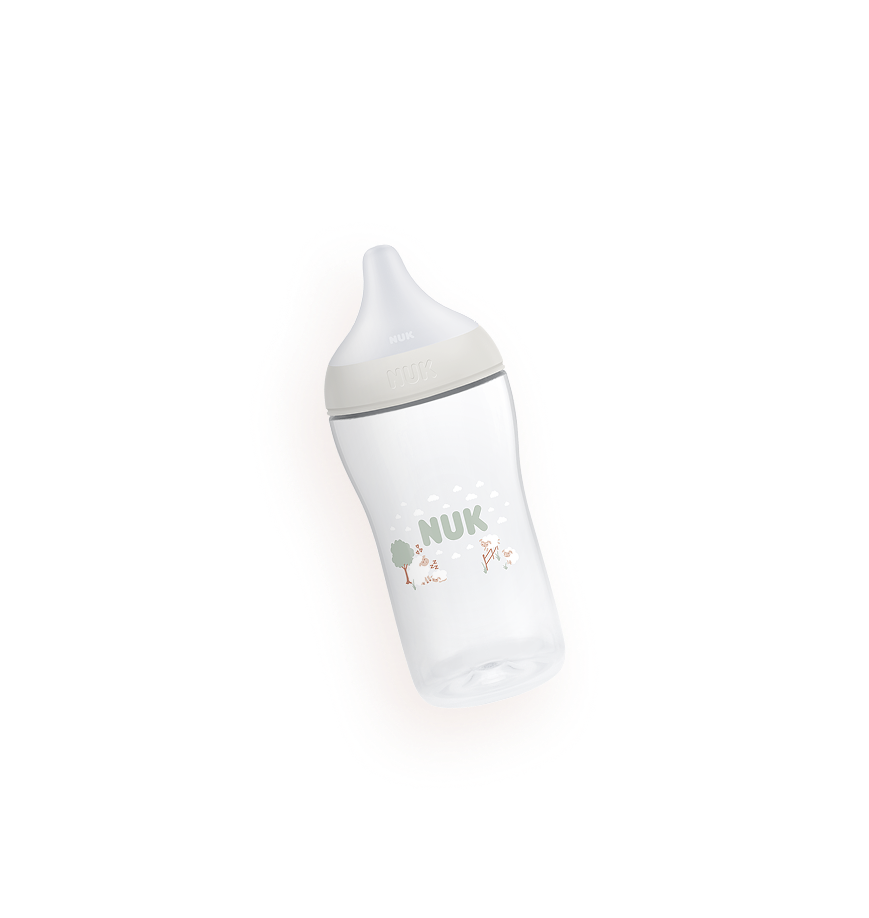
NUK Perfect Match Baby Bottle with soft silicone teat

Learn more

As your little one grows, understanding their unique needs around eating and drinking is paramount. We know you want the very best for them, and good nutrition is key to their vibrant baby development. Knowing how important hydration is while caring for tummy trouble helps.
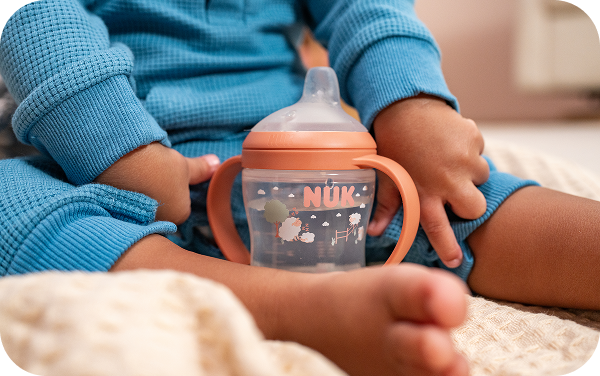
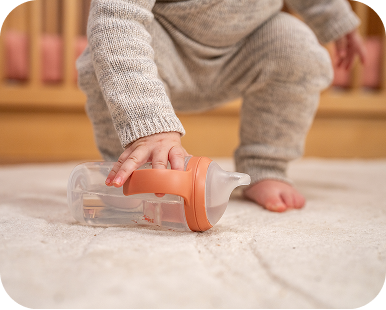
Baby with NUK sippy cup

The importance
& of hydration

Learning to drink independently is a huge baby milestone! While milk provides enough fluid in the early months, as solids become more frequent, water becomes crucial. It's not just about quenching thirst; it’s about supplying organs with nutrients and regulating body temperature for their happy toddler growth.

Navigating tummy troubles

Witnessing your little one in discomfort can be heartbreaking. Tummy aches are often caused by the natural development of their intestines or swallowed air. Remember, these are common and knowing how to soothe them brings immense relief to both of you. Understanding the "why" behind their fussiness is the first step to bringing back those peaceful smiles.

Nurturing
healthy
habits

Building healthy eating and drinking habits is a journey filled with love and learning. These step-by-step guides offer practical advice to help you gently introduce new experiences and support your baby's growing independence at the table. Every little step, every tiny taste, is a victory!
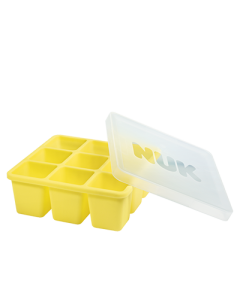
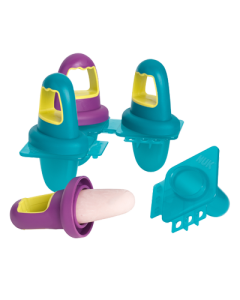
NUK freeze box for baby food storage

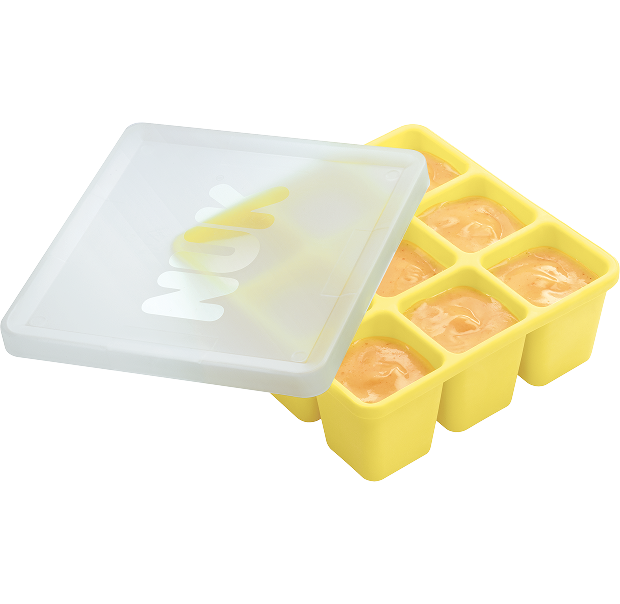
NUK Freeze Box

Learn more
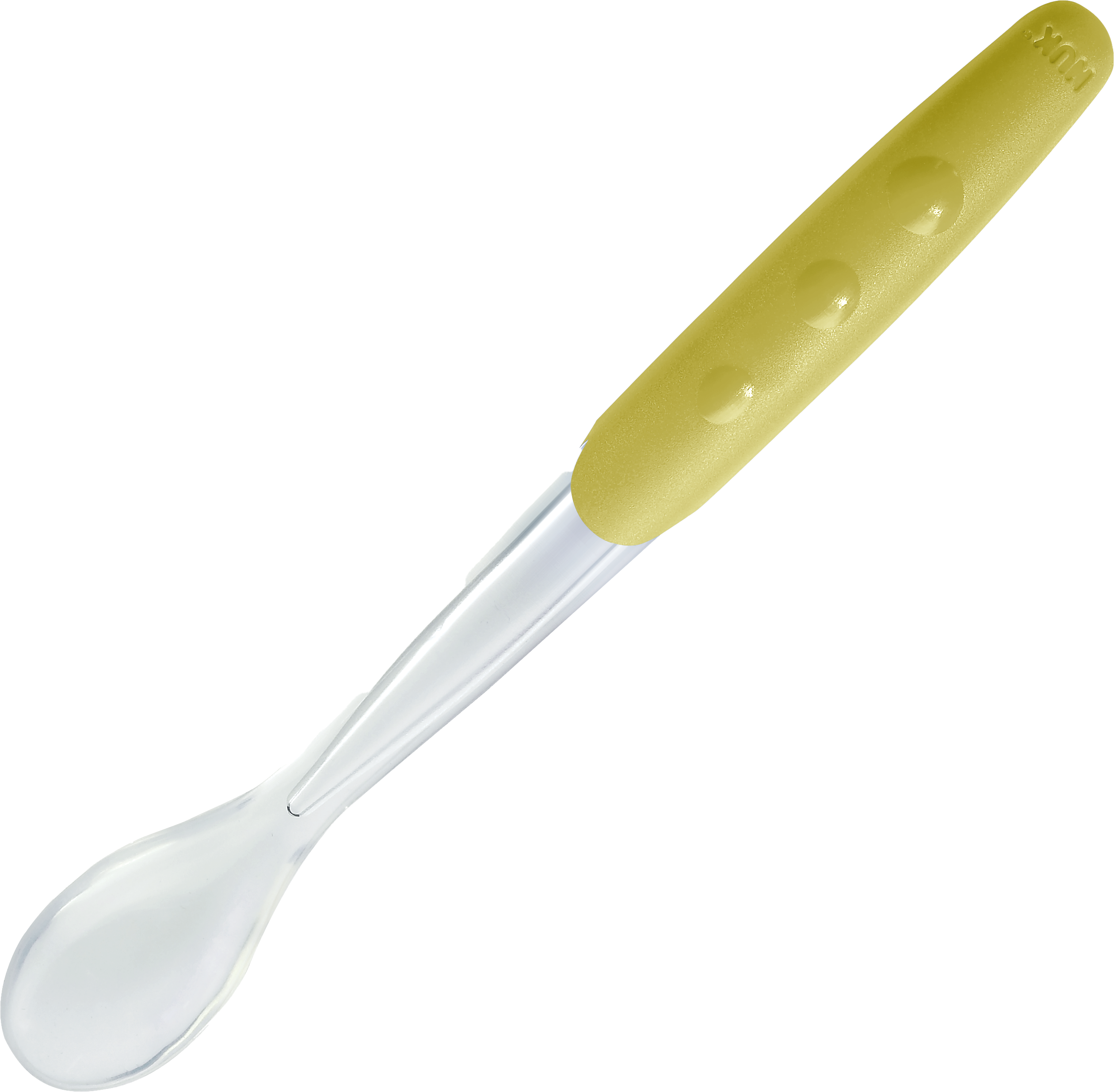
NUK feeding spoon

NUK Easy Learning Feeding Spoon Soft

Learn more

When to offer
more drinks

In the first months, breast milk or formula provides ample fluid. Once you introduce solids, and particularly when three pureed meals replace milk feeds, it's time to offer additional drinks with meals. This ensures your baby meets recommended water intake, especially as they join more family meals.

What to drink:
safe & sweet sips

Protecting those milk teeth is key! Offer only water or fruit and herbal teas. Fruit juices, even diluted, contain fructose and acids that can harm developing teeth. Remember, using drinking cups with spouts as "permanent teats" can also be detrimental. Encourage drinking from cups as early as possible to safeguard their smiles!

Baby with NUK sippy cup

Encouraging
independent drinking

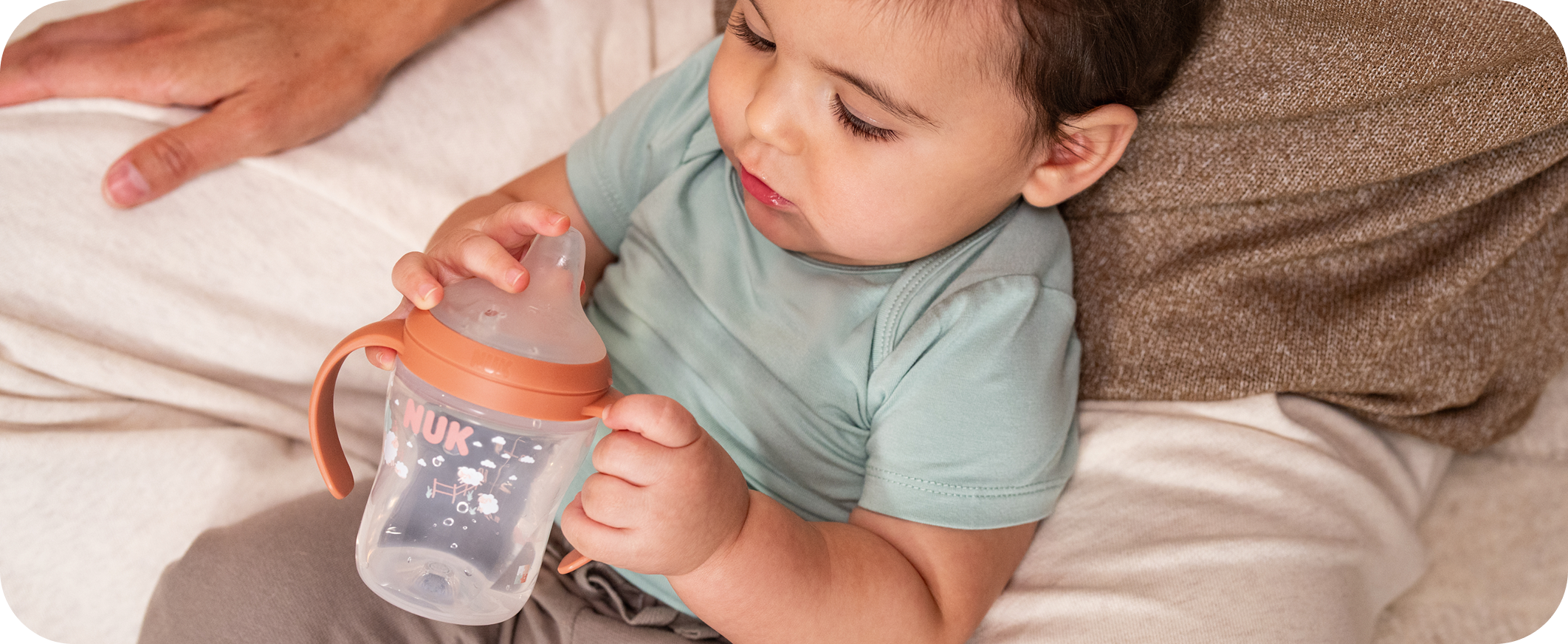
Learning to drink on their own takes practice, holding the cup, bringing it to the mouth, and swallowing. Our NUK learner bottles, NUK and NUK First Choice Cups are designed to grow with your child, offering exactly what they at every age. Be a role model by drinking plenty yourself and make drinking fun with engaging cups!

Soothing tummy aches

Try a soothing baby massage, like ”the cyclist" (calm, round leg movements) or ”the flyer" (baby tummy-down on your forearm). Other gentle approaches include ”the rower" (circular arm movements) or simple pressure points like ”the palm presser." Remember, reducing swallowed air during feeds is also a key way to minimize discomfort!

The first
mash

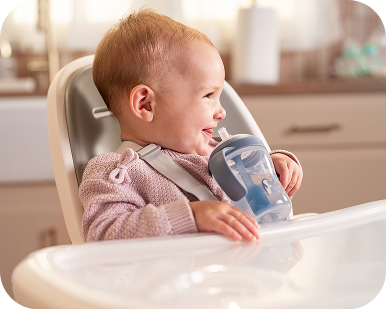
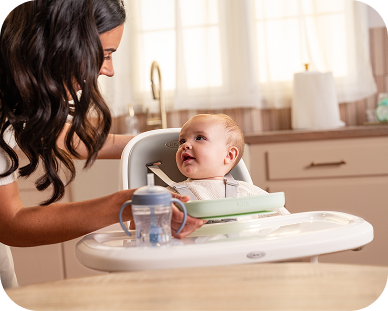
Baby in highchair with cup
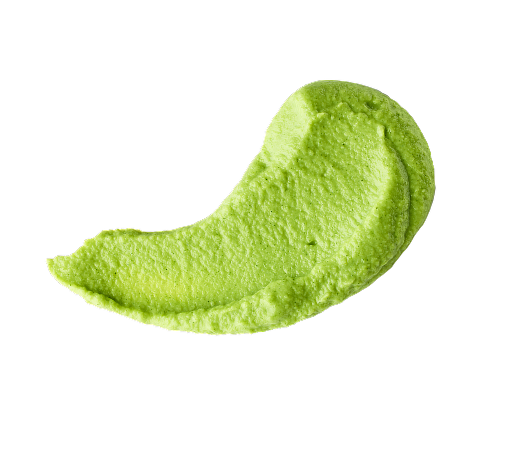
Green puree
Baby reaching

Around 5 to 7 months, your baby is ready for a delightful new adventure: their very first solids! This is a period of exciting baby development, where increased nutrient and energy needs gently call for more than milk alone. Weaning earlier than this is generally unnecessary and can even increase allergy risks, as baby's tiny tummy isn't quite ready.

Closeup of bottle with baby

Building their
meal plan

Once your baby happily accepts solids, you can gradually replace milk feeds month-by-month. Start with a vegetable, potato, and meat mixture, then introduce a whole milk and cereal porridge in the evening, and finally, a cereal and fruit porridge at lunchtime.

See all products

Homemade vs.
jarred & hydration

Whether you cook baby's food yourself or choose pre-prepared jars, always check ingredients carefully. Remember, your baby needs to drink as well as eat! Offer water, unsugared baby tea, or strongly-diluted, unsugared fruit juice to aid digestion and keep them happily hydrated.

Starting solids

Around 5 to 7 months, your baby is ready for a delightful new adventure: their very first solids! This is a period of exciting baby development, where increased nutrient and energy needs gently call for more than milk alone. Weaning earlier than this is generally unnecessary and can even increase allergy risks, as baby's tiny tummy isn't quite ready.

Learning to
eat &drink
independently

As your little one approaches and enters their second year, mealtimes become a celebration of toddler development and growing independence! With new teeth emerging and dexterity blooming, they're ready to embrace finger foods and join family meals. It's a joyous time of discovery, even if it gets a little messy!

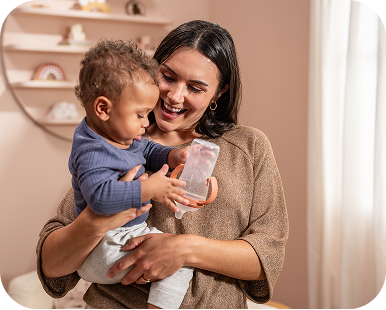
Mom feeding baby
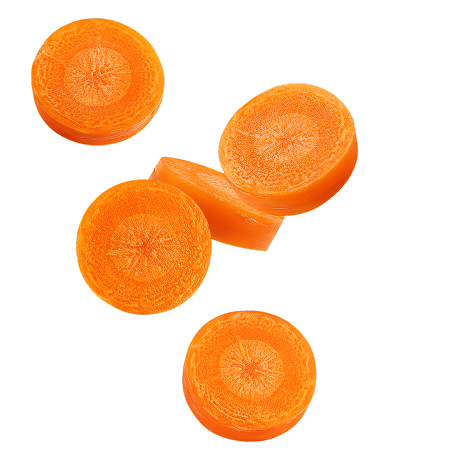
Carrot slices

Transitioning
to family meals

Around 10 months, your child can gradually start sharing meals with the family! Put away the blender and simply mash food or cut it into small pieces. Offer slices of wholemeal bread for breakfast and fruit or vegetable pieces as snacks.

Finger foods

Encourage their growing desire for autonomy! Fruit and vegetable pieces like bananas, pears, or cucumber sticks are not just nutritious; they also develop crucial mouth muscles and promote speech.

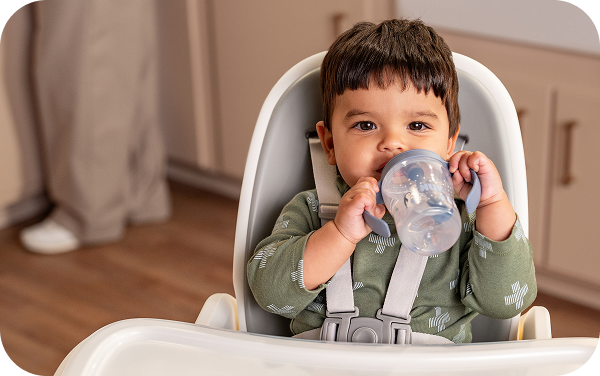
Toddler drinking from cup

UNDERSTANDING & EASING DISCOMFORT

Tummy ache? Oh dear! Many babies struggle with this discomfort in their first months, and witnessing their pain can be challenging. Understanding why babies cry due to tummy ache and what you can do about it is the first step to bringing peace and comfort to your little one, ensuring a happy start to life.

What causes tummy aches & how to soothe them?

The main culprit is often the natural immaturity of the intestines, leading to gas and painful pressure. Stress can also play a role. Gentle interventions, like a baby massage, can relieve pressure and relax your baby. Techniques such as ”the cyclist" (calm leg movements), ”the flyer" (baby tummy-down on your forearm), or "the rower" (gentle arm circles) can work wonders. A NUK bottle with anti-colic function is also designed to minimize swallowed air.

What does their nappy say?

Believe it or not, your baby's nappy holds secrets about their health and nutrition!


Black and tough (Meconium): Your baby’s very first bowel movement, normal within 48 hours of birth.


Light green and liquid (”projectile poop"): Common after colostrum, in the first two weeks with transitional milk.


Yellow and soft: Typical for mature breast milk.


Yellowish, solid and intensely smelly: Often seen with formula-fed babies.


Colorful and solid: Common once solids are introduced, reflecting their diet.


Green, foamy, pungent: If persistent, this can indicate an infection. Contact your pediatrician.


FEEDING YOUR BABY WITH NUK

incl. VAT plus shipping costs

THE QUESTIONS YOU MAY HAVE

  • In the first months, breast milk or formula provides all the fluids your baby needs. Even when you introduce one or two pureed meals, additional drinks are usually not necessary. The change comes when you replace a third milk meal with puree; at this point, it's a sweet signal to start offering water or suitable teas with meals to ensure proper hydration for your growing little one.

  • Keeping your baby hydrated is key! For babies from 4 to under 12 months, the German Nutrition Society recommends around 400ml of drinks per day (on top of fluid from food). To protect those tiny milk teeth, only water or fruit and herbal teas should be given. Fruit juices, even diluted, contain sugars and acids that can harm their developing teeth. Encourage your little one to drink from cups as early as possible to avoid "baby bottle caries" from constant sipping.

  • Learning to drink is a big baby milestone! It involves coordinating holding the cup, bringing it to the mouth, and swallowing. Our NUK learner bottles, NUK Evolution Cups, and NUK First Choice Cups are thoughtfully designed to grow with your child, offering exactly what they need at each stage. You can also be a wonderful role model by drinking plenty yourself and making drinking fun with engaging cups!

  • Witnessing newborn baby stomach pain can be heartbreaking, but tummy aches are common in the first months due to developing intestines or swallowed air. Gentle colic comfort can be found in soothing baby massages (like "The Cyclist" or "The Flyer"), warm baths, or a snug swaddle. Our NUK anti-colic bottles are also designed to minimize swallowed air, reducing pressure on tiny tummies. Understanding their cries (hunger, tiredness, pain) is your first step to providing loving relief.

  • Around 5 to 7 months, your baby's growing needs will signal it's time for baby’s first solids! Weaning earlier isn't recommended. Start gently with a few small spoons of finely pureed vegetables before their milk feed. Don’t be discouraged if they make a funny face – new tastes and textures are a big discovery! Our NUK Guide to Feeding offers detailed information, age-appropriate advice, and recipes to help you make this a joyful adventure. 

  • It's completely normal for little ones to explore tastes at their own pace! If they don’t like something straight away, try offering it again another day. Never force your child to eat or clean their plate; they still know best when they've had enough. Your child’s food intake will naturally fluctuate. Focus on offering variety and making mealtimes fun and pressure-free. Every new bite, every new taste, is a step towards healthy eating habits!