

NUK BRAND BIOGRAPHY
GROWING HAPPILY AND NATURALLY SINCE 1950
In the 1950s, Germany was busy with the so-called “economic miracle.” The new Federal Republic faced a lot of work, and technical advancements were not yet widespread. But it was also a decade when the first relaxing holidays abroad were taken, romantic films were watched at the movies, and hips swung to rock ‘n’ roll.
With the baby boom of the 1950s, the need for better baby products also grew. Breastfeeding was considered unfashionable; children were primarily bottle-fed. Many children sucked their thumbs or were given rolled-up cloths to provide makeshift satisfaction for their sucking reflex. The consequences were often dramatic: crooked teeth, tooth decay, and speech disorders. Already at the end of the 1940s, dental experts, Prof. Dr. Dr. Wilhelm Balters and Dr. med. dent. Adolf Müller discovered that breastfed babies developed significantly fewer crooked teeth. This led them to further research sucking, drinking, and breastfeeding. As a result, they invented the first asymmetric teat shape, which was modeled on the physiology of a mother’s breast during breastfeeding. This "natural and jaw-friendly" shape is still used in the production of NUK Teats and Soothers today.
Initially, consumers were puzzled by the asymmetric NUK Teats, as there was simply no information available about this new product. NUK responded by visiting clinics and midwives to explain the medical concept and the teat's benefits. At the same time, general interest in dental health was increasing, so it didn't take long before NUK Soothers and Teats were seen in an ever-increasing number of happy babies’ mouths. Nearly everyone has seen baby photos of their own parents or relatives with the plain, white NUK Soothers in their little mouths. By the end of the 50s, the NUK brand had become a household name.
In the 1960s, a special kind of magic was in the air. Beatles, miniskirts, the moon landing, emancipation – life became colorful, fun-loving, different. Modern technology was responsible for many changes in this decade and achieved significant breakthroughs that are still relevant today – audible, visible, tangible. A comprehensive NUK range as the answer to rising demands and evolving family planning.
Progress also transformed parenting, childcare, and family planning. Approved for use in the USA in 1960, "the pill" became available in Germany a year later. This innovation not only impacted family planning but also significantly altered the role of women. Society changed: women could now plan pregnancies. Many focused on their education and careers first, choosing to have children later – making parenthood an increasingly conscious decision. Consequently, the requirements and demands for all aspects of baby and childcare evolved.
The disposable nappy was invented, and the latest pram became an object of prestige. Medicine continued to develop too: 1967 saw the first ultrasound scanner. Even in terms of baby food, there were developments: wholesome baby food could now be produced from powdered milk.
While a practical invention for mothers, it presented NUK with new challenges: filling milk powder into the then-common narrow-necked bottles proved difficult. NUK reacted promptly, introducing a bottle with a wider opening to the market. Shortly afterwards, the screw cap followed, finally allowing baby formula to be shaken and transported without leaking, greatly simplifying things for new mothers. The company stayed attuned to the times, using liquid latex to accelerate the production of NUK Teats with their jaw-correct shape, thus meeting constantly increasing demand.
The 1970s were a remarkable decade. It was not only flower-power, bell-bottom trousers, disco sounds, and a growing variety of lifestyles that ensured that, but also social movements springing up everywhere. The stories that wove themselves through this decade can be traced back, for the most part, to this change in social consciousness: people were more aware of themselves and their environment and reflected on natural development. The natural principles of NUK products perfectly matched the era's new acceptance of nature's inherent wisdom.
This also extended to the perception of infants. Babies were increasingly viewed as independent personalities, communicating with their environment from birth and possessing feelings and memories. Consequently, babies' emotions became a central focus for parents, medical practitioners, and society. Women increasingly gave birth in clinics rather than at home, leading to considerably improved services for pregnant women, children, and parents. NUK visited doctors, nurses, and midwives in hospitals to engage in dialogue, offer advice, and draw inspiration. This collaboration led to success: in 1971, NUK introduced the world's first disposable teat for bottles. Teats and screw-rings were pre-assembled, pre-disinfected, and individually, hygienically packed – particularly crucial in clinical settings . Other specialized medical products, such as teats for special needs, emerged from close collaboration with clinic personnel.
By the mid-1970s, "rooming-in" gained popularity in German hospitals: mothers were now permitted to keep their babies in their own rooms, rather than newborns being cared for solely in neonatal wards. NUK, too, wanted to offer babies and parents optimal care and expanded their advisory service in clinics even further.
The “return to nature” also led to a renaissance in breastfeeding at home. To further support this natural and "close contact" feeding, NUK began offering other breastfeeding products , such as nipple shields to protect tender nipples. However, NUK’s most significant innovation in this decade addressed air intake: thanks to the invention of a teat with an air vent in 1979, a vacuum no longer formed inside the bottle during feeding. This meant babies swallowed less air and experienced fewer tummy pains. As successful trends spread globally, NUK products were available in over 48 countries by the end of the 1970s.
The 1980s not only witnessed the meteoric rise of Madonna's career but also introduced the first home computers, vivid color combinations, new television channels, shoulder pads, and the fall of the Berlin Wall. A true melting pot: the 1980s were characterized by numerous simultaneous changes. Consequently, the world looked vastly different after these ten years – politically, aesthetically, and even for babies. A lot of color and a colorless synthetic material.
It was a true medical miracle: on April 16, 1982, four years after the birth of the world's first “test tube” baby in the UK, Germany's first “test tube” baby was born in Erlangen – thanks to IVF (in vitro fertilization). Individuals who had previously been unable to conceive now had this possibility. As birth rates rose for the first time since the 1960s, the state actively worked to ease the path to parenthood. Extended maternity leave allowed new mothers to return to their previous jobs after a year.
Innovations for babies also proliferated: even more than in previous decades, the focus was on simplifying the daily routines of babies and mothers. The first baby monitors entered the market, and combined with improved child car seats, overall children's safety significantly advanced.
Under the slogan "Some Motherly Love," NUK intensified its efforts for babies and parents. As a pioneer in natural baby products, NUK invested its expertise in other areas of daily life. Breastfeeding was, and still is, recommended, with breast pads and electric breast pumps making natural feeding easier for both mothers and babies. NUK also developed other urgently needed products: baby toothbrushes, teething rings to ease discomfort, and specialized potties. Developed in collaboration with experts, the sterilizer was introduced in 1985 for practical steam disinfection. NUK ventured into a brand new product sector: as "Silicon Valley" boomed in the USA, the innovative material, silicone, found its way to NUK. This sparked a soother revolution: silicone soothers emerged as an alternative to latex.
While fashion was flashy, cars vibrantly colored, and accessories trendy and bright, NUK too infused its products with new colors. Thanks to new printing technologies, many products could now be manufactured with colorful designs. NUK was once again at the forefront of current trends.
In the 1990s, progress accelerated even further: the World Wide Web (or Internet), electronic "techno" music, and mobile phones were invented. "Higher, further, faster" best describe this decade. At the same time, scientists concentrated even more on babies and children. Long-term studies and new research findings demonstrated that babies react to their environment from a very early age, and this interaction significantly impacts their development. This marked the starting signal for countless ante- and postnatal support programs. Classical music was believed to enhance fetal well-being and intelligence, while toys were thought to advance early learning. Mothers were not overlooked: in Germany, the right to a kindergarten place was legally established, and thanks to electronic media, the traditional workplace became more flexible. Increasingly, mothers were better able to combine work and family life. NUK brought teats that “grow with your child” and striped ducks to the 1990s.
The latest anthropological (study of humankind) findings revealed that for both teats and soothers, it's crucial not only for their shape to suit the jaw, but also for them to be of optimal size. NUK reacted immediately by introducing the world's first "growing" size concept for teats and soothers, corresponding to key developmental stages: infants between 0-6 months, babies over 6 months, and children over 18 months.
NUK had even more innovative ideas in the 1990s: in 1998, the leak-proof drinking cup entered the market, helping children learn to drink independently at an early age. New quality control processes, technologies, and innovations led to further developments in existing NUK products.
In keeping with the slogan "Understanding Life," NUK won a place in children's hearts for the first time in the 1990s: popular and beloved characters, such as JANOSCH or Snoopy, adorned bottles, soothers, and other NUK products. In 1998, NUK finally became available online, offering parents information and practical tips around the clock.
The Millennium brought new vocabulary: information was now googled, friends were added, products ordered, personal information shared, and people were "online" almost constantly. Google, Facebook, Amazon, iPhone, and Co. have changed our daily lives. One of the catchphrases of the new century was "demographic change." Everyone debated "children or career?" as birth rates drastically decreased. New mothers wanted both children AND a career! Modern women were no longer solely mothers but fulfilled many other roles in life. Young families wanted to enjoy their happiness without compromising. The allocation of roles required redefinition. In Germany, in 2001, "maternity leave" evolved into "parental leave," offering either parent the opportunity to take time off work. Since 2007, a parent on parental leave also receives earnings-related child support. Extensive knowledge about children and babies emerged – and these findings needed to be applied to the daily routines of families. As the century changed, NUK brought practical solutions into the changing daily routines of families.
NUK embraced its slogan "Understanding Life" even more literally, once again becoming a pioneer. Throughout the first decade of the 2000s, numerous products were developed to make the lives of children and their parents healthier and better organized. Clever ideas were as crucial as medical findings in this endeavor. In 2003, the combined bottle and teat system, "NUK FIRST CHOICE ," was introduced. In 2006, the NUK Oral Care program launched for healthy and hygienic oral development. In 2007, the NUK Genius Soother arrived on baby shelves; its optimized teat shape incorporated all the scientific findings NUK had collected up to that point. In 2010, NUK ventured into a completely new territory: the NUK Baby Bottle Cleanser, designed to make baby bottles, teats, and soothers simply cleaner. By the end of the first decade, numerous new products perfectly suited the dynamic and flexible lifestyles of families with children in the new millennium.
The 2010s began much like the previous six decades: with new children. The demands for natural, baby-suitable products are constantly evolving – every generation has different needs. Innovations marked the start of this decade for NUK.
In 2011, NUK introduced a program designed to further simplify life for young families: the new NUK Easy Learning 1-2-3 leak-proof cups. They help little ones learn to drink independently – sip by sip, making it truly child's play. In 2012, NUK introduced yet another innovation and a world first, the NUK Thermo Light: a baby food warmer that gently and hygienically heats baby food using light technology, without water.
That same year, the NUK First Choice+ debuted: the new generation of teats designed for relaxed feeding, mirroring a mother’s breast. Contributions to this product's development came not only from medical professionals and midwives but also from mothers – they are the only ones to know what an ideal baby bottle should be like. With excellent products for learning to eat, a brand new soother, and new household and care products, NUK has once again developed numerous ideas for simplifying the lives of children and parents.
The 2020s began much like the decades before: with new families, new questions, and a growing desire to do what feels right. Parents today are more conscious than ever – seeking products that are designed to support their baby’s natural development while also caring for the world their children will grow up in.
This decade marked a meaningful step forward for NUK. With the launch of the NUK for Nature range, we introduced a more sustainable approach to baby care – combining trusted NUK expertise with materials and processes designed to reduce environmental impact, without compromising on what matters most: your baby’s wellbeing.
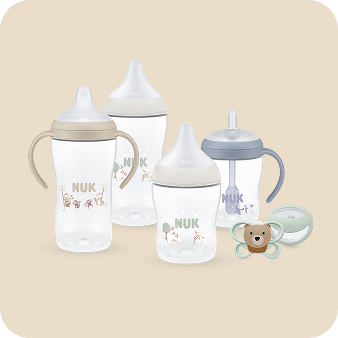
At the same time, a new chapter in feeding began. For many years, NUK First Choice had been the trusted companion for countless families. But as parents’ expectations evolved, so did we. With the introduction of the NUK Perfect Match Bottle, NUK entered a new era – offering an innovative system designed to adapt even more closely to baby’s natural feeding rhythm, supporting a smooth and intuitive experience from the very first moments.
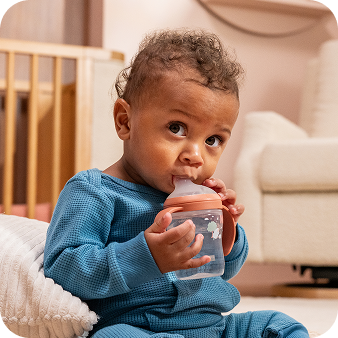
This idea of harmony continued across the portfolio. The NUK Perfect Match Soother was developed to fit seamlessly into baby’s natural sucking behaviour, providing comfort in a way that feels familiar and reassuring. And with the NUK Perfect Match Learner Cups, little ones are gently supported on their journey towards independent drinking – step by step, at their own pace.
With thoughtful innovations, a growing focus on sustainability, and a holistic system designed to work in perfect harmony, NUK continues to support families in the most natural way – understanding that every baby is unique, and every journey is beautifully their own.
LOOKING AHEAD: 70 YEARS OF NURTURING LIFE
In 2026, NUK stands on the cusp of a remarkable milestone: 70 years of dedicated support to families worldwide. To mark this momentous occasion, we are thrilled to introduce an entirely new generation of our beloved Perfect Match platform. This renewed commitment goes beyond innovation; it deepens our promise to nurture life, creating products that not only care for babies and parents but also prioritize our planet for a healthier, brighter tomorrow. Together, we continue our journey, step by step, towards a future where natural development and babies development go hand in hand. At NUK, we look forward to seeing what great ideas the future would bring!